|
I've been busy creating a podcast for the last few months and it has just released into the wild a couple of weeks ago. I'd love it if you checked it out and spread the word. The podcast is all about how to best help anxious kids and teens. Each week I interview experts in the field of mental health, parenting, meditation, and more. I also have episodes called the Parents Corner where parents come on to share their experiences. Below is the website and a link to Apple Podcasts and Spotify, but it's available on most other podcast platforms as well. Thanks for your support! https://www.theanxiouschildpodcast.com/ https://podcasts.apple.com/us/podcast/the-anxious-child-podcast/id1564755946 https://open.spotify.com/show/2A0CzizRq5ywE9St46bJSs?si=taiNwKCvTWGeTaCsmfNzKQ 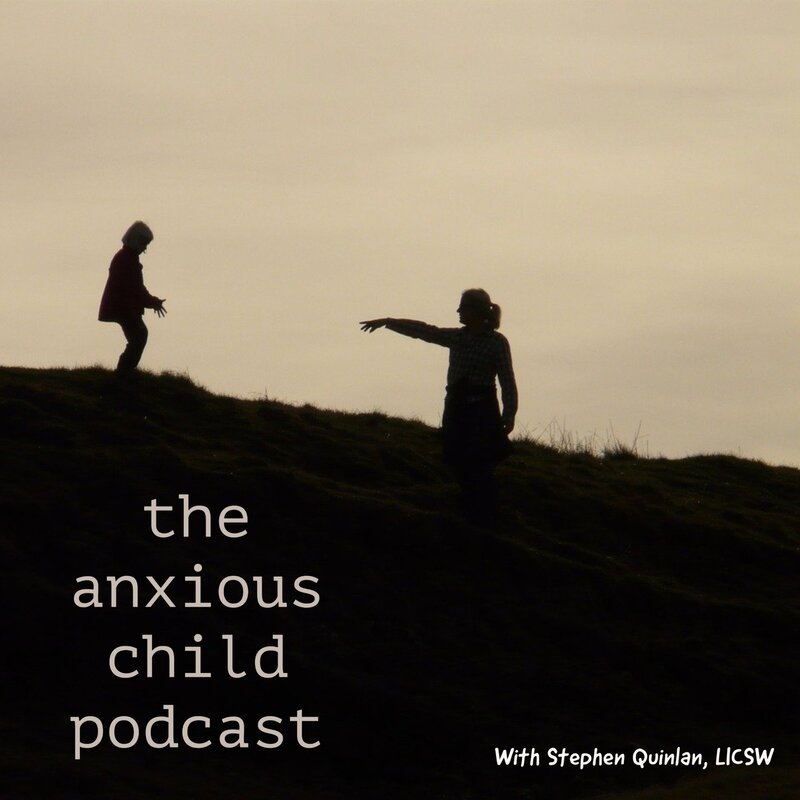
0 Comments
 It's March! That means melting rivers and snow and hopefully, this year, many other shifts as well. I'm excited to announce that I have been fully vaccinated for close to a month now and I hope that many of you are as well. I'm hopeful that this helps to ease the minds of people who are coming to see me in the office. But, more importantly, I'm hopeful that this Spring can represent a return to doing many of the things that we enjoy, such as being outside and hopefully soon, a return to less restrictions and more of spending time with people who we haven't seen in person. Here's to the Covid numbers dropping and the temperature outside rising!
 Here's a great graphic with some ideas on how to help your child adjust to wearing a mask. Currently, I am seeing clients through an online platform (doxy.me) which offers HIPAA compliant levels of encryption. Although psychotherapy sessions are technically considered an essential service, I made the decision to move to online sessions in March to best protect everyone's health and well-being.
I am considering slowly reopening the office to those who would most benefit from face to face sessions. When this takes place, I will also continue to offer telehealth services for those that would prefer.  After 14 years of life and 12 years of service as a therapy dog, Layla has passed on to the great beyond. While it is a sad time, it also is wonderful to look back on her life and see how many people she touched and helped. I know she is somewhere doing all the things she loved, maybe chasing tennis balls or laying in front of fires and snoozing. We love you Layla!
Hazel has been a little sad, but has been staying busy at work and prepping for her therapy dog test coming up soon!  Hazel is currently being trained as the eventual successor to Layla who is starting to wind down her visits as she approaches her 11th birthday (but she is still going strong!). At five months old, Hazel has already shown a real love of people and a wonderful demeanor. She will be unable to officially take the therapy dog test until she is at least a year old, but we are working towards it. Hazel's father was also a therapy dog and we think that is where she got her cute wrinkly face! She is sometimes around and sleeping in her crate in the office. Ask to say hi!
http://www.seacoastonline.com/news/20160320/eliot-students-learn-about-service-dogs
ELIOT, Maine – A black Labrador retriever named Layla sauntered through the elementary school gym like a rock star as children stretched their arms out in hopes of touching the black beauty this past Wednesday. Students this month met four different service dogs and the people they assist as part of Eliot Elementary School’s Service Learning’s "Dogs at Work" project, which incorporates Read Across America and Beyond as well as Square1Art. Students asked questions about each dog and how they help others. Layla helps therapist Stephen Quinlan at his job as he works with kids.  The following is an article written by Juliette Foster. Enjoy!
Mindfulness as a Tool to Promote Mental Wellness Mindfulness is not a new principle, as it is integral to Buddhism, but there is increasing interest in its value as a therapy to enhance mental well-being. There is evidence that adopting this technique can help to manage conditions such as anxiety, depression associated with pregnancy and post-traumatic stress disorder. Mindful practices can also promote better memory, so have potential as a therapy in the early stages of dementia, and can improve learning and concentration, making it a valuable tool in education. Being more mindful can additionally foster healthy relationships, which itself can boost mental wellness. However, even with this range of benefits it is important to understand what mindfulness is and the mechanisms it works through. Understanding mindfulness When we are mindful it means we pay close attention to our thoughts, the way we feel and take in our surroundings. This involves concentrating on the moment without being distracted by former experiences or what is still to come. Another principle of mindfulness is that we don’t make any judgments, so we accept things as they are. However, we need to appreciate that we are responsible for our thoughts and activities, and that it is possible to change these for the better. Mindful mechanisms Mindfulness doesn't work through just one component; there are four that explain the way in which it works. Through attention regulation, which involves focusing on a physical object, this helps us avoid distractions. By concentrating on our breathing and other internal sensations, this promotes greater awareness of our bodies. Meanwhile, by accepting our emotions, this gives us more control over them. Finally, by changing the view of ourselves, we can acknowledge that it is possible to make changes which can have a positive impact on us. Avoiding its drawbacks No form of therapy is perfect, so mindfulness has its limitations. For example, if we become too aware of our body, this can heighten sensations, as is sometimes the case when it comes to feelings of pain. There is also a chance that when we use mindfulness when it is not called for that this can interfere with creativity, as our mind needs to wander to inspire creative thoughts. Similarly, abilities and skills not under conscious awareness are also more difficult to acquire when mindfulness is overused. The key to avoid these problems is therefore receiving instruction on when it is suitable to use mindful practices. Mandala photo courtesy of http://unityinmarin.org/  Feeling depressed can make it hard to do much of anything. The cycle of depression is particularly difficult to manage in that doing certain things can help you to feel better, but often those very things are the hardest to do! Being outside can have a tremendous effect on your well-being. Now that the winter is over, even just doing things such as yard work can have multiple benefits. Vitamin D from the sun in combination with exercise and a feeling of accomplishment from getting things done is a powerful anti-depressant. Vigorous exercise can have even more of a profound effect. Here are some ideas for summer fun to keep the blues away:
-Try tackling that yard project that you have been putting off. -Sit on your deck for at least 20 minutes in the sun and listen to music or read. -Have friends over for a cookout -Take the dog for a walk -Mow the lawn -Plant a vegetable garden -Outdoor yoga -Take the kids to the playground -Go for a hike with a friend -Walk on the beach So get out there and enjoy feeling better! |
AuthorStephen Quinlan is a Licensed Independent Clinical Social Worker who practices in Dover, NH Categories
All
|
 RSS Feed